

The Follow-Up Effect: Why Retail Revenue Starts After the First Transaction (Infographic)
63% of shoppers return after personal follow-up. Learn how post-purchase outreach drives repeat visits, incremental revenue, and customer loyalty.

Retailers spend enormous time, energy, and budget getting customers through the door (or onto the website). But what happens next that truly earns a repeat visit from those customers is often treated like an afterthought.
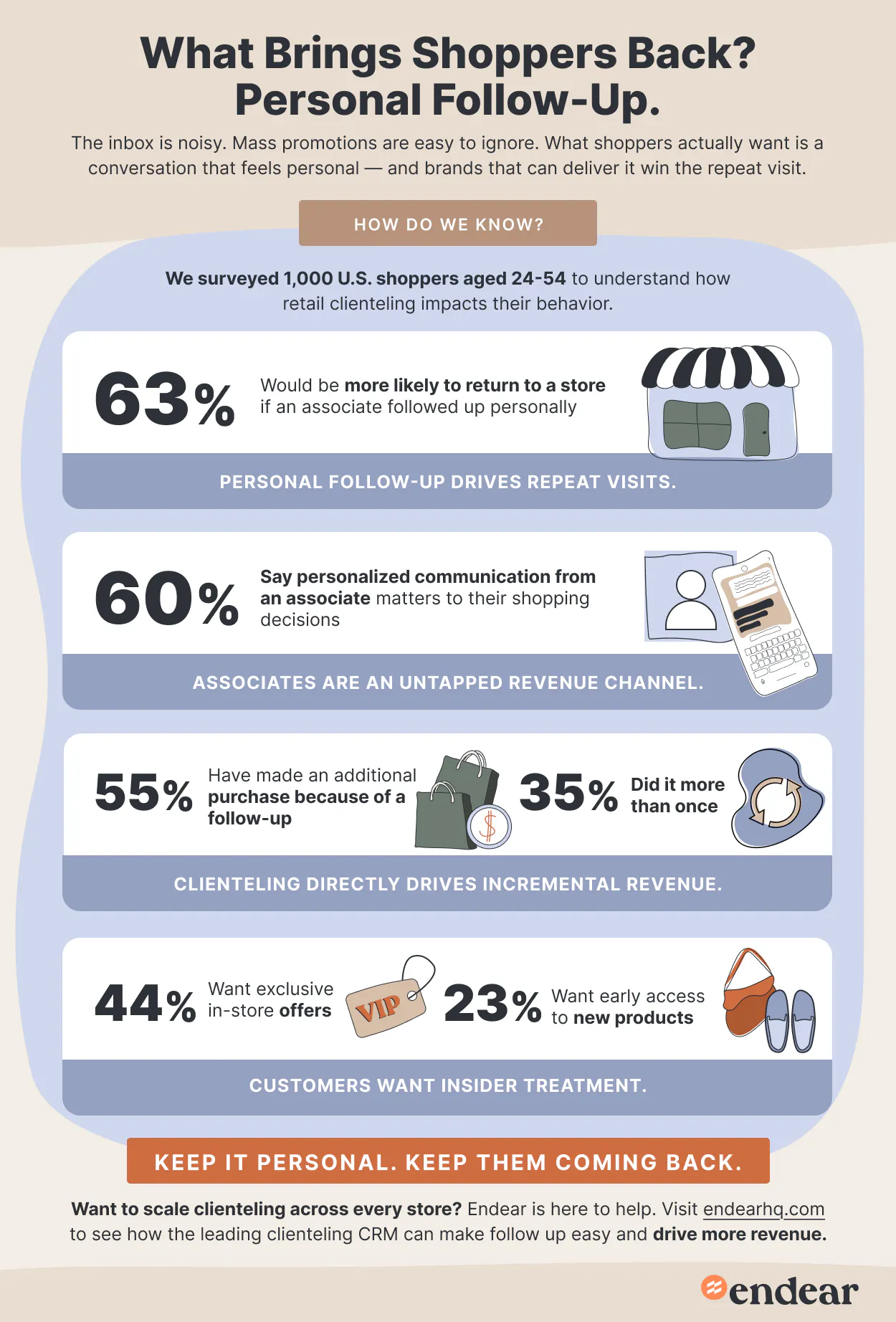
We conducted a survey of 1,000 U.S. shoppers aged 24-54 to find out how personal follow-ups influence their shopping behavior. The result?
The data shows that the real revenue opportunity begins after the purchase, when brands continue the conversation. In fact, personal outreach from store associates (which we call great clienteling around these parts) isn’t just a nice touch but a proven driver of repeat visits, incremental sales, and long-term loyalty.
We’ve put together an infographic with our survey data, but let’s also dig into some of the most actionable insights pulled from this survey and what it all means for retail teams today.
Insight #1: Personal Follow-Up Drives Repeat Visits
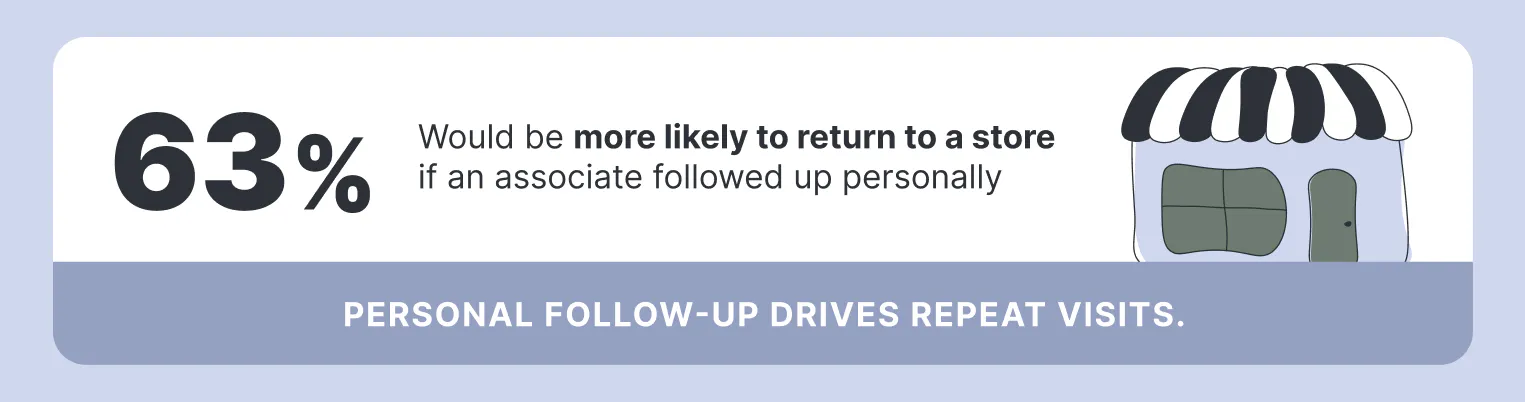
One of the most striking findings from the survey is that 63% of shoppers say they would be more likely to return to a store if an associate followed up personally.
In other words, nearly two-thirds of your customers are telling you that proactive outreach could bring them back!
Yet many brands still rely on generic promotional campaigns via impersonal mass emails, or worse, just wait for customers to initiate the next interaction by coming back to their stores. Great retail brands that cultivate a culture of loyalty aren’t passive like that. Here’s how your brand can be more proactive after the first sale.
1. Build a structured post-purchase cadence
Follow-up should never be randomly or haphazardly sent out. Retail teams need a defined outreach timeline that includes:
- A thank-you message within 24–48 hours
- A check-in after product use (typically a week)
- A targeted appointment invitation for the next visit
Consistency matters more than intensity. Brands that build a rhythm of communication become part of a shopper’s routine rather than a one-time transaction.
2. Assign ownership at the associate level
Customers don’t form relationships with your name, logo, or even your exquisitely designed floor layout. They connect with people. Customers that form relationships with a favorite store rep are way more likely to become loyal, repeat shoppers.
Assigning each shopper to a specific store associate transforms outreach from marketing noise into genuine clienteling, but it takes a proactive effort on your part to create the connection. This is why we always recommend sending personalized emails and texts from a dedicated associate that can engage in a back-and-forth dialogue with each customer.
3. Use follow-up to create momentum, not just closure
Too many teams treat follow-up as customer service, and often the last stage of customer service. “Did you like your product? Great!” End of relationship. But from our viewpoint, the best teams treat follow-ups as merely the beginning of their growth strategy.
Every subsequent outreach moment should answer one simple question: “What’s the next step in this customer’s personal journey with our brand?” Maybe the next step isn’t just another visit or purchase. Maybe the next step is to provide styling tips of the sweater they just bought, or getting to know the big life events that are coming up in the next few months. Each journey is different, which is why more personal clienteling matters in modern retail, and why the right retail CRM is key to doing this en masse.
Insight #2: Clienteling Directly Drives Incremental Purchases
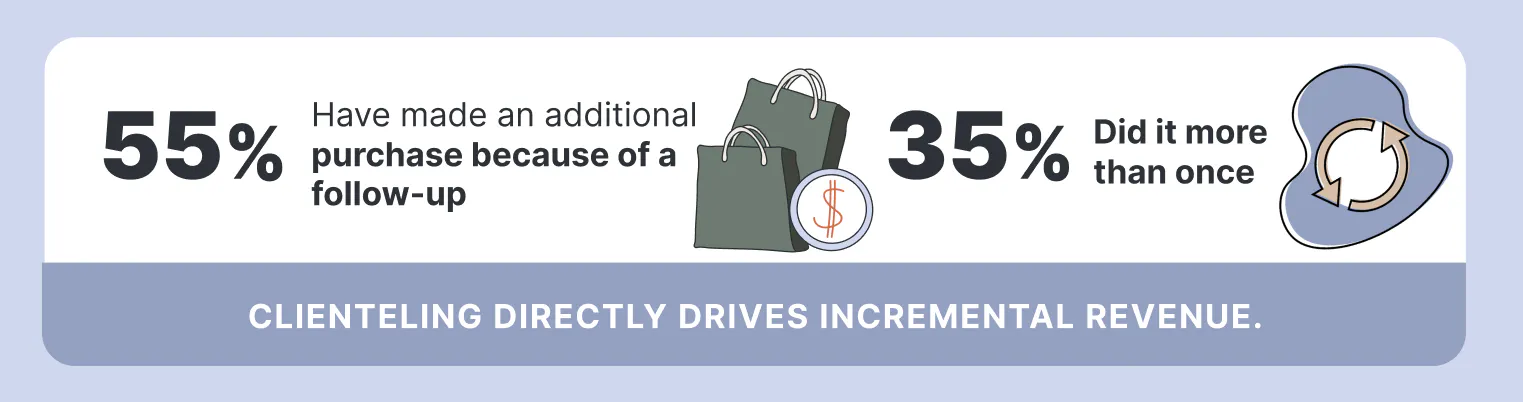
Another standout stat from the Endear customer survey: 55% of shoppers report making an additional purchase because of a follow-up from a store associate, and 35% say they’ve done this more than once.
There’s no secret to recurring revenue, for you retail marketers scratching your heads as to why your mass email ads aren’t driving any repeat sales. More so than ever before, shoppers are looking for that personal connection with a brand that makes them feel like they’re not just one of the masses. That’s why down-to-earth TikToks are working for even the largest brands. That’s why texts have such a high engagement rate. The more you can make it feel like your shopper is chatting with a friend, the better the results as shown in the data.
And far too often, brands focus too much on acquisition metrics of new customers while overlooking the sales potential already sitting in their customer database. This quarter, try focusing less on getting new people in the door and more on following up on the customers who haven’t purchased in a while. Here are some tips to turn follow-ups into measurable revenue:
1. Make recommendations contextual and timely
Follow-ups should feel more like, say, styling advice, and not so much like sales pressure. For example:
- Suggest personalized, complementary products after a purchase
- Notify customers about restocks in their size or preferred color
- Invite them to preview new arrivals that match past purchases or even past browsing
2. Track outreach as a revenue channel
Retailers track ecommerce campaigns obsessively, but how many track engagement and outreach revenue metrics such as:
- Sales attributed to associate conversations
- Repeat purchase windows after outreach
- Store visits generated by personalized messaging
Treat clienteling like a performance channel, and it will start behaving like one.
3. Train teams to think beyond the transaction
Top-performing retail teams across the brands we work with understand that the sale isn’t the finish line, but just the starting point of a relationship that can drive years of repeat business. This is a core belief and these teams are trained and equipped with the right tools to put theory into action.
That’s why more retailers are choosing clienteling tools like Endear that make it much easier to run these personalized engagement campaigns across all your customers, making each of them feel like they’re getting the VIP treatment. Because even though the digital transformation of retail has reshaped how customers shop, it hasn’t changed why they shop and why they shop again.
The retailers winning today are not necessarily the ones with the biggest marketing budgets. They’re the ones building the strongest conversations and relationships with their customers.
Want the Full Data Story? Peep Endear’s Infographic
These insights are just a preview of Endear’s latest retail customer research. Check out our full infographic below to explore all the findings and get insights into how personalization can drive measurable retail growth.
Want to scale clienteling across every store?
We're here to help. Book a demo with our team of retail experts to see how the leading CRM can make consistent follow-up easy across your stores.
Latest posts in Clienteling
Learn from the best - subscribe to our clienteling newsletter now.
Latest posts in Clienteling